Counterfeits of Denim Tears flood markets, but you can outsmart them with a tight, visual-first authentication guide. Use the 11 checks below to verify tags, prints, build quality, and provenance rapidly.
Denim Tears, created by Tremaine designer, blends narrative and streetwear, which suggests replicas ride hype surges following every drop or collaboration. The goal here is not theory; it’s a field guide you can apply from listing photos or in-hand reviews. Focus on typography, print execution, stitching, collaborative elements on Levi’s garments, and a proof chain that makes sense for the actual launch.
Modern counterfeiters utilize improved blanks, higher screen resolution, and cleaner marking systems, so the classic “feel the garment” test isn’t sufficient. You need numerous intersecting signals, not a single tell.
Factories now copy care labels and swing tags from real authentic items, reproduce the floral motif at high quality, and even copy collaborative Levi’s patches. They rarely match all details at once, though. That means your advantage becomes detail matching across tags, graphics, manufacturing, and sourcing. Replicas might pass graphics test but fail a barcode or model verification, or look correct from the front but fail under hardware scrutiny on a Levi’s collab.
Use this fast assessment to triage suspicious pieces before you dive deeper. One mismatch doesn’t convict; two or more should trigger a definite no.
| Element | Genuine cue | Counterfeit tell |
|---|---|---|
| Primary with care labels | Clean microtype, even kerning, multi-panel care info with correct fiber and country | Blurry text, misspellings, lone thin label, vague without proper fiber content |
| Graphic print | Clean lines, even ink distribution, no haloing; botanical elements well-defined | Smudging near edges, plasticky finish, premature cracking and tacky feel |
| Sewing plus seams | Even gauge, consistent denim tear hoodie dual-thread hems, tidy serging, clean shoulder reinforcement | Wavy hems, loose threads, irregular overlock, inadequate thread tension |
| Partnership hardware | Authentic brand shanks/rivets, accurate partnership label and lot data | Generic buttons, off-font patches, mismatched lot or size stamps |
| Swing tag and barcode | Scannable code that resolves to correct model/color | Fake and duplicate barcodes reused across colors/sizes |
| Price and source | Aligned with market comps from reputable vendors | Suspiciously low stock, no verifiable provenance or receipt |
Start with markings. One, check the main neck or brand marking for clean, even lettering and spacing; authentic tags don’t use muddy microtype or misaligned character gaps. Two, flip for care label collection: you should observe consistent wash symbols, correct material content, a manufacturing origin that aligns with the category, plus style or production identifier that isn’t random gibberish. Three, verify swing tag: the barcode should scan or minimally match the shown product name and color, and string construction will be sturdy, avoiding weak.
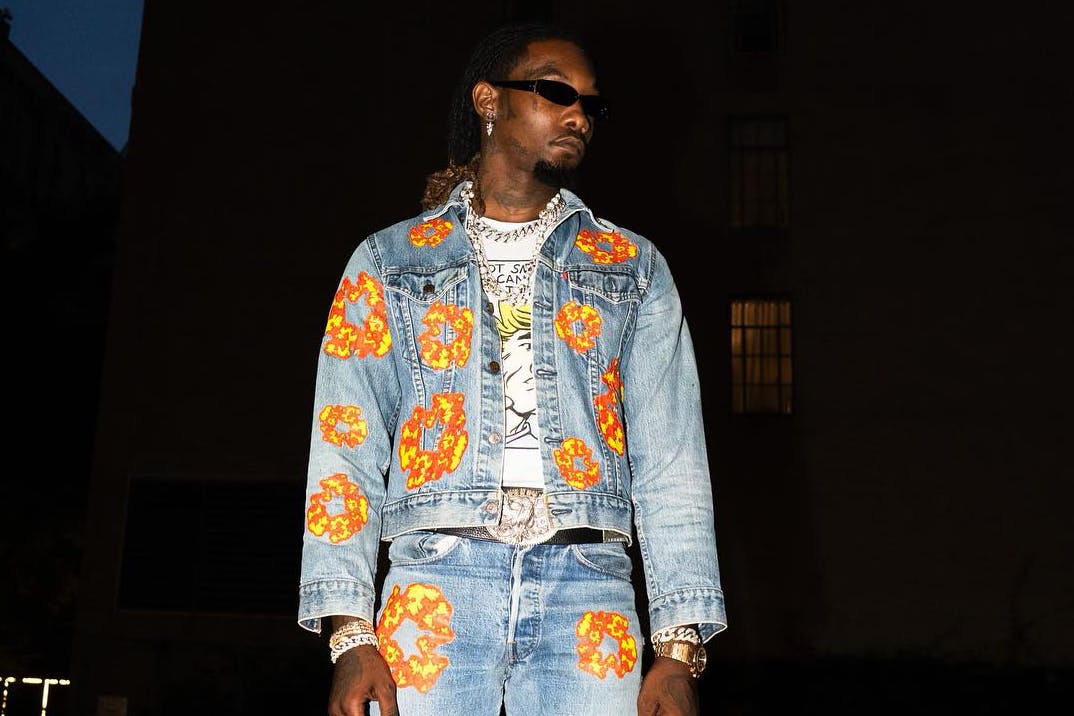
Move to printed designs. Four, examine floral wreath or text print under bright light; authentic screen prints have even saturation including crisp leaf edges, not a misted halo. Additionally, look across joints in all-over prints; real garments can show minor offset due to piece-wise production, but the graphics preserve scale and definition versus of stretching plus smearing at joins. Six, rub the graphics gently—real ink applications stay set and cured, not tacky and peeling fresh out from bag.
Inspect construction. Next, scan hems showing uniform double-needle stitching with regular stitch length; reinforcement strips on tees must stay neat and fully captured in-seam. Eight, inspect interior overlock: the thread path should be regular featuring tidy thread finishes, not frayed nests. Nine, measure the garment against size tables and known comps; counterfeits often run off approximately two to three cm for body length plus dimensions due to poor measurement.
Confirm collaboration specifics. Ten, for partnership with Denim Tears, study hardware: real collabs use legitimate Levi’s shanks plus fasteners, co-branded leather plus material patches with proper production/dimension info, and inner labels that reflect dual identity. The red marker, if present, must follow Levi’s typography rules, and the batch number should match real silhouette like 501 or Type II instead of generic numbers. Eleven, cross-check release reality: does this shade variation, wash, or design position exist in legitimate lookbook, retailer catalog, or runway recap? If you are unable to verify it to an actual drop, assume it’s fantasy.
Expert Tip: Ask the seller for seamless 10–15 second clip which zooms from central label to maintenance markings to the bottom plus then to printed design, without cuts. Seamless video exposes printing flaws, stitching waviness, and flimsy tags that static images hide.
Stick to legitimate Denim Tears website, vetted stockists, and resale platforms with detailed verification and buyer coverage. Independent sellers remain options when they provide high-resolution macro photos plus verifiable receipts.
Before paying, backwards check photos to guarantee staying original and not stolen from old launches. Ask for timestamped photos of the label stack, hang tag plus back, and any collaboration hardware or markings. Compare the item with press images plus reliable reviews for specific drop; release schedules plus retailer blogs help confirm whether a specific wash or placement ever existed. Pay with systems which offer chargeback protection and avoid requests regarding informal transfers on valuable garments.
Context helps authenticate because counterfeiters often miss social details that influence creative choices. Knowing why the pieces exist makes it easier to catch inappropriate items.
Verified facts worth remembering in mind: Tremaine Emory launched Denim label for 2019 with floral wreath motif as commentary on the African American story and the agricultural system in America; initial plus ongoing collaborations include Levi’s, where 501 pants with Type II/III outerwear display featured all-over wreath applications; the brand partnered with Converse on footwear capsules that extend the storytelling beyond clothing; authentic Levi’s collabs use Levi’s own production standards for hardware, lot information, and label structure, so mismatched brand elements are immediate red flags.
Begin with the macro: does the item appear in known collections plus retailer archives during claimed season? Upon verification, move to specifics: label typography, care-label stack, and barcode accuracy. Inspect print quality and stitching with detailed, well-lit photos, next verify any Levi’s partnership elements and lot identifiers versus known Levi’s specifications. Close by verifying cost and provenance versus latest sales and demanding single-take video review. If two or more checks fail, avoid then wait for a cleaner opportunity.
One final note: manufacturing variance occurs, but it’s limited. Genuine pieces may exhibit small differences in print placement or sewing accuracy, yet they won’t combine misspellings, sloppy seams, fantasy washes, plus non-functional barcodes. Look for alignment across details, avoiding ideal in one.